The longest day of the year also marked the start of the summer running season.
Nearly two dozen people participated in the annual Summer Solstice Run on Wednesday night, with local teenager Bryan Earnshaw coming in first overall. The course is two miles long and stretches the length of Henry Swanson Drive, along Captains Bay.
The Unalaska Department of Parks, Culture, and Recreation will be hosting their next race, the Ballyhoo Run, on July 21. Results
The scrap heap at the Unalaska landfill is a metal recycler’s dream. You’ll see 70s-era cars and stoves, and plenty of valuable stainless steel and aluminum. City officials think there could be hundreds of millions of pounds of scrap on this island. It’s enough to make a metal recycler rich, but more than most can handle.
In 2008, an attempt to clear the junk failed when a contractor walked off the job after removing the biggest pieces of metal from the island. That caught Ron Moore’s attention last year. He and his wife Yvonne operate R.L. Moore Metal Recycling near Norfolk, Virginia. She found a news story about Unalaska’s recycling problem online and asked her husband to take a look.
United Fishermen of Alaska, an organization representing 37 commercial fishing groups, is hiring a new executive director.
Mark Vinsel, who has held the position for eight years, is transitioning to the newly-created administrator position. He says it's recently become clear that the organization needs more than one employee.
“You know, during this eight years we’ve seen a proliferation of the number of different agencies, especially on the federal level, with which we need to be keep up to date with what’s going on that might affect fishermen.”
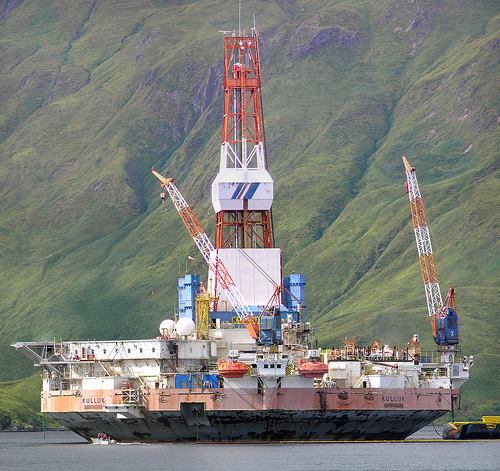
Oil and gas development is the Arctic is on track to happen this summer, but what does that mean in the long-term for Unalaska and the Port of Dutch Harbor? Several city councilors, the mayor, the city manager and the city planning director went to Louisiana earlier this month to find out what changes the oil industry might bring to town. On this episode of The Exchange, Councilor Dave Gregory and Mayor Shirley Marquardt discuss the trip and what they think the future might hold for Unalaska.
Cleveland Volcano sent up its largest ash plume since 2001 on Tuesday afternoon. A pilot flying in the vicinity estimated the height of the plume at 35,000, although Alaska Volcano Observatory geophysicist Dave Schneider says that's a rough guess.
"[It depends] on [the pilots'] perspective - the accuracy really depends on how far away they are and which way the plume is blowing etcetera. We also saw the explosion on our distant seismic network and it appears to be short duration, on the order of several minutes, so it's not a very significant event and it's unlikely to cause much disruption to aviation."
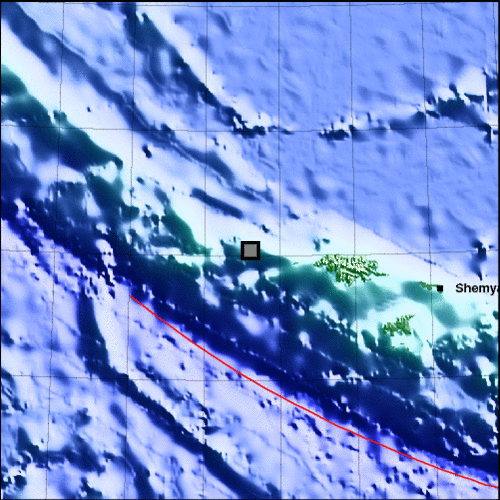
A strong earthquake shook Shemya Island this morning, but caused no damage to Eareckson Air Station.
The 6.0-magnitude earthquake occurred just before 8am in a mostly uninhabited part of the Western Aleutians. The epicenter was approximately 100 miles away from Shemya Island, and the dozen or so airmen stationed there noticed the ground shaking.
"Everybody felt it, but there were no thrown objects," says Natasha Rupert, a seismologist with the Alaska Earthquake Information Center. "It wasn’t even strong enough to topple objects from the shelves."
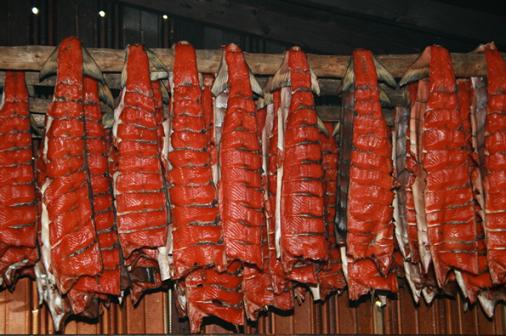
The salmon may be running at Cape Wislow, but no one is keeping track of how many are spawning.
For the past decade, the U.S. Fish and Wildlife Service has operated a weir at the run that connects Reese Bay to McLees Lake, giving the community accurate counts of how many sockeye salmon are making it up the stream. The federal grant for the program ran out last year, so the Alaska Department of Fish and Game agreed to take the weir over for the next three seasons.
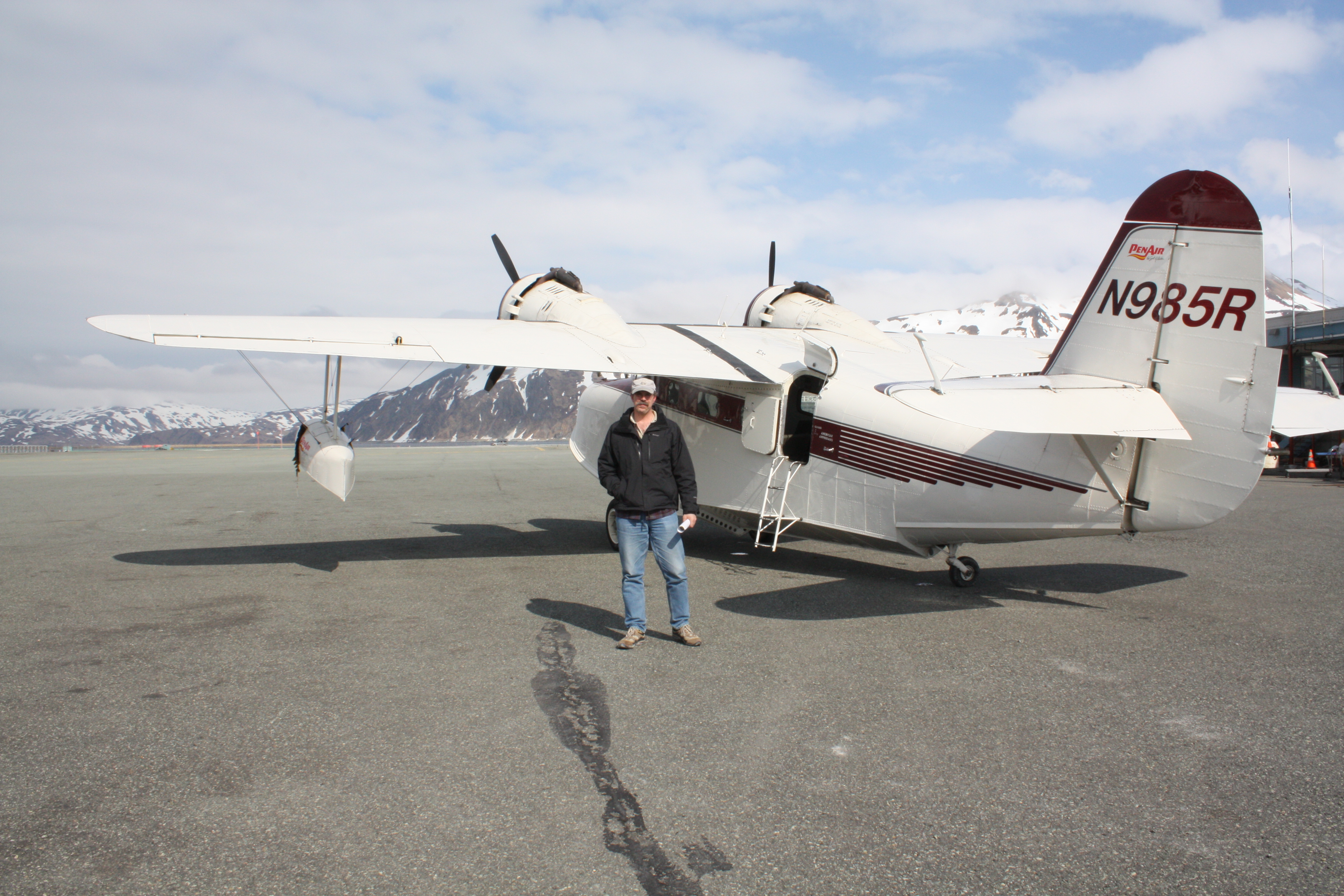
Burke Meese has been one of the Grumman Goose's pilots since 1996. (Alexandra Gutierrez/KUCB)
The Akutan Airport project has been described as a “runway to nowhere” by national media. The $64 million airstrip is being built on uninhabited Akun Island, and the hope is that by the end of summer, Akutan residents will be able to catch flights out there after taking a six-mile trip by either hovercraft or helicopter.
While people outside the Aleutians might be wondering how this is all going to come together, area residents are focused on what the project means for a local icon. The Grumman Goose has served the region for the better half of a century, and it’s the last World War II-era seaplane still in scheduled commercial use in Alaska. But once the new airport is complete, water landings in the Bering Sea will be a thing of the past.
American Seafoods has agreed to pay out $700,000 in penalties to the federal government over Clean Air Act violations.
According to the Environmental Protection Agency, the company was caught smuggling 155,000 pounds of a refrigerant that causes harm to the ozone layer. The EPA also alleges that American Seafoods catcher-processors used these illegal refrigerants for four years.
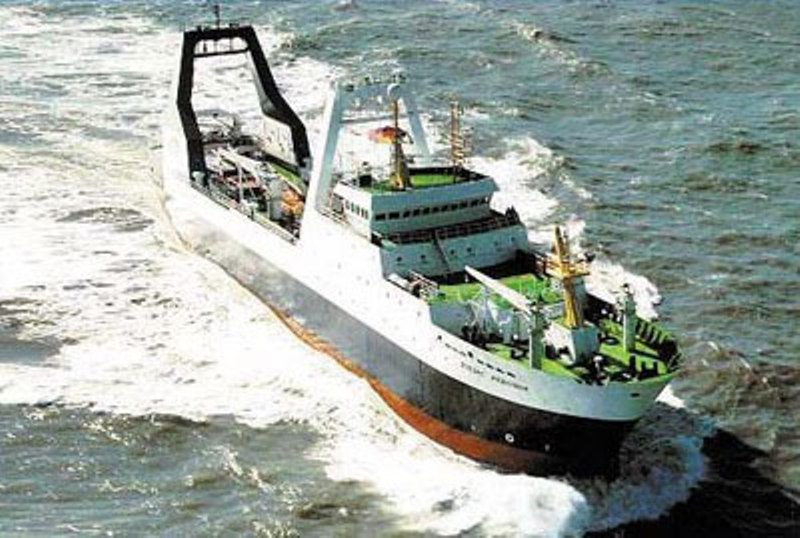
In addition to payment of the fines, American Seafoods has agreed to retrofit the refrigeration systems on five vessels the process fish in the Bering Sea. The upgrades to the Northern Jaeger, the Ocean Rover, the American Triumph, the American Dynasty, and the Katie Ann will cost up to $15 million. The company will also be performing leak tests aboard these vessels over the next year.