Unalaska is a designated ‘port of refuge’ for disabled vessels in the Aleutian Islands, but when it comes to the massive ships that pass by on the Great Circle route, that title doesn’t mean much. That’s because many of them are too big to tie up at the docks and there’s nowhere else for them to securely anchor.
That could change soon though. City Council is holding a special meeting Friday to decide whether to fund an emergency mooring buoy. City Manager Chris Hladick says the process is being rushed because the city is getting help from Shell Oil sub-contractor Harvey Gulf. The company has offered to transport the anchor, chain and buoy up from Louisiana for free, but only if it’s on the boats that are leaving for Alaska next week.
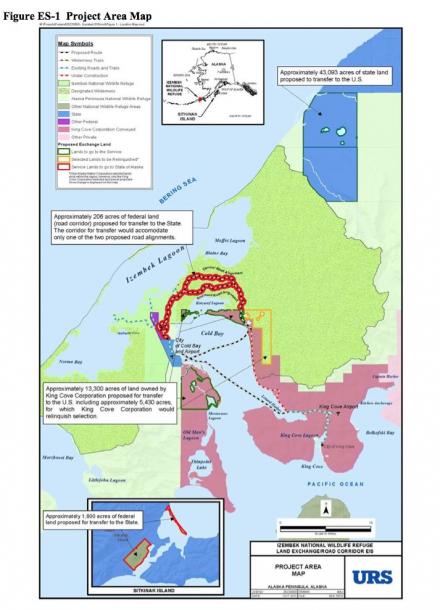
For decades, the community of King Cove has lobbied for a road through the Izembek National Wildlife Refuge to nearby Cold Bay. Proponents say it’s critical for the remote community to have a more reliable way to evacuate medical patients. Meanwhile conservation groups contend it would devastate critical wildlife habitat.
The U.S. Fish and Wildlife Service recently issued a draft environmental impact statement for the project, but a final decision about whether it should move forward is still more than a year out. In the meantime, King Cove is already building a hovercraft terminal on the edge of the Refuge and a road out to it - but there are a few kinks in that plan.
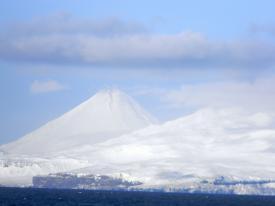
A new lava dome is forming in the crater of Cleveland Volcano. In response, scientists at the Alaska Volcano Observatory bumped the aviation alert level from yellow to orange on Wednesday.
It’s the fifth time since July that the Observatory has raised the alert. A series of small eruptions earlier this month removed the lava dome that had been forming since January. None of the eruptions produced a significant ash cloud and there’s been no activity at the volcano since March 13.
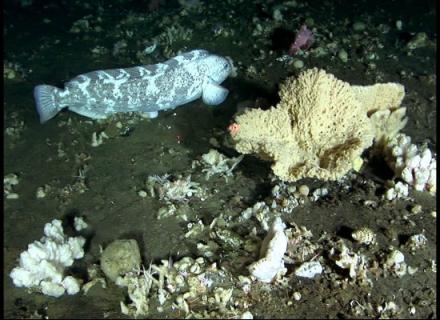
Using a tiny submarine, a group of scientists have finally been able to get a good look of what actually goes on in the Bering Sea’s canyons. In the process, they discovered a new species of sponge and got a better idea of how deep-sea corals serve as a habitat for some of Alaska’s commercial fisheries.
The National Oceanic and Atmospheric Administration, the University of California Santa Barbara, and Greenpeace undertook the project. John Hocevar, who is Greenpeace’s Oceans Campaigner and one of the lead authors of the study. He says that the research was important because little is known about how the canyon’s corals fit into the ocean ecosystem.
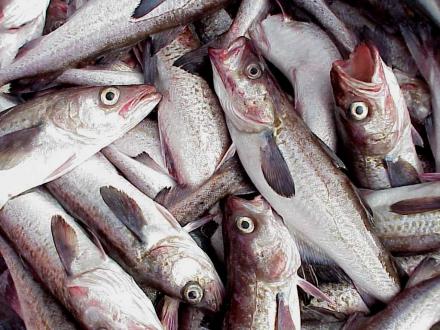
Pollock A season is quickly coming to an end. Crews are going home, roe has been auctioned off, and industry players are already looking ahead to what B season will bring.
As of mid-March, the fleet had taken 85 percent of their 472,000 metric ton allocation. They moved at a slightly faster pace than last year, despite having a smaller quota available. They also didn’t have too much trouble with Chinook bycatch – they’ve taken about 6,500 fish so far, and their bycatch rate is comparable to last year and well under the 62,000 fish hard cap that would shut the fishery down.
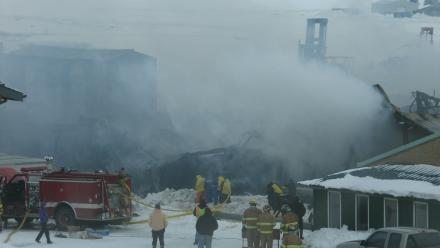
The St. Paul Department of Public Safety has determined that arson was the cause of a February fire that destroyed a large warehouse.
According to The Dutch Harbor Fisherman, police have identified multiple suspects, but no arrests have been made in the case.
The blaze consumed a warehouse operated by Trident Seafoods and took multiple days to put out. Smoke from the fire also resulted in a half-day school closure for St. Paul's students. The Alaska Department of Environmental Conservation is currently monitoring the clean-up, as hazardous materials such as petroleum products and asbestos may have been released during the incident.
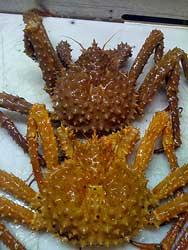
The world’s supply of king crab legs is about to increase. On Friday the Alaska Board of Fisheries voted to up the Aleutian Islands golden king crab allocation by five percent.
Unlike the other crab fisheries in the Bering Sea, the amount of golden king crab that can be harvested is set in regulation. There’s a model in development that will allow fisheries managers to decide on an annual basis how much crab can be caught sustainably, but that’s still a few years out.
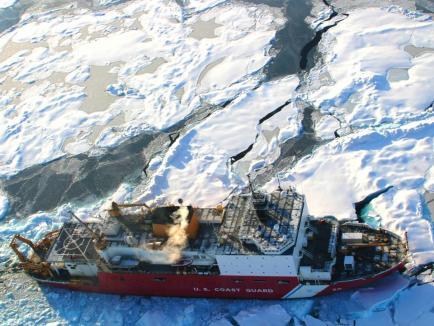
With Arctic drilling scheduled to go ahead this summer, Shell Oil is expected to have a big presence in Port of Dutch Harbor. In light of that, the Coast Guard has now committed to stationing more forces there in an effort to keep fish processing operations and other marine activity moving along smoothly.
At a recent hearing before the state legislature, Capt. Buddy Custard laid out the Coast Guard’s plans for their summer Arctic operations. He says that because Greenpeace has already launched a protest in New Zealand over exploratory drilling, the United States is making an extra effort to make sure that port operations in Alaska are not disrupted by dissent over oil politics. “Whether you’re [for drilling] or against it, it’s very emotional. And with that, our job in the Coast Guard is to make sure that if there are any protest activities that it does not disrupt commerce, that it does not disrupt a port,” says Custard.