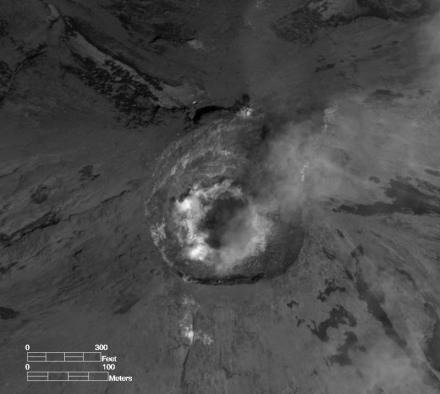
According to the Alaska Volcano Observatory, the eruption occurred around 4:30am, and it sent a small ash cloud as high as six kilometers into the air. There is no real-time seismic monitoring network on Cleveland, but the activity was recorded by nearby stations on Okmok and Makushin volcanoes.
Cleveland is located on uninhabited Chuginadak Island, but it lies under a major international flight path. Today’s eruption did not interfere with air travel, but the aviation color code remains at orange. The remote volcano has shown regular activity over the past two years and continues to be on watch.
The fate of the Alaska Coastal Management Program now lies in voters’ hands.
Legislators in Juneau introduced a bill this spring that would revive the program and circumvent the ballot initiative process, but it failed to get any traction. There are no plans to reconsider it during the current special session. Now, voters will decide during the August 28 primary election whether or not to reinstate the program.
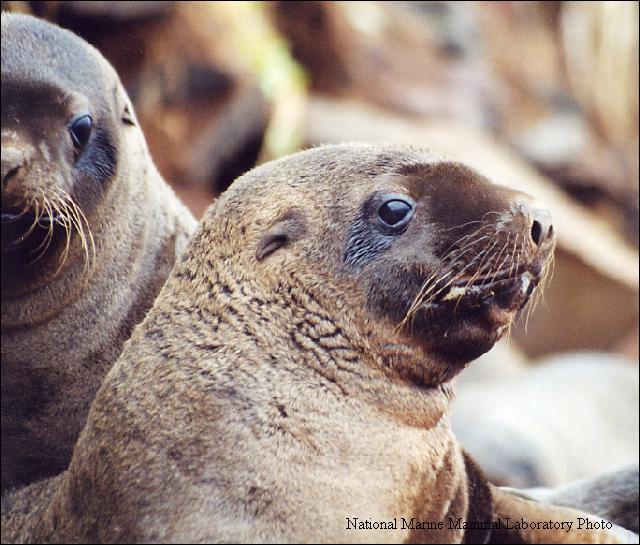
While the population Steller sea lions in the western part of the state is still a subject of concern, the stock in eastern Alaska is experiencing a boom. In the past 15 years, the number of eastern Steller sea lions has doubled up to 70,000 animals, and now, federal biologists want to take the animal off the endangered species list.
Nearly 2,000 species have been placed on that list since it was created. If the eastern Steller sea lion is removed from it, it will be only the second animal to have achieved recovery status.
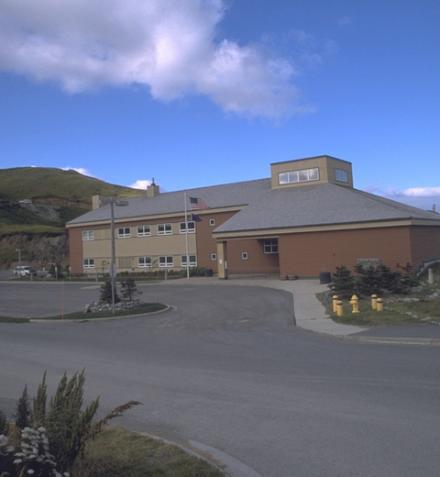
City council met last night to approve two construction contracts related to road maintenance and accept the resignation of one councilor.
Director of Public Works Nancy Peterson opened the special meeting with a presentation that described the city’s road improvement plan. She said that the city is currently working on preventative maintenance to keep costs down, but that it’s difficult to quantify the final price of fixing the community’s roads because of factors like Unalaska’s geographic location and the presence of WWII-era contaminants. The cost for improving just the city’s two main streets, Airport Beach Road and East Broadway, is being projected at $9 million. Smaller arteries could be maintained with locally recycled asphalt, which could help keep costs down and allow major construction to be deferred. She also announced that an ordinance limiting trailer height and use of chains in an attempt to prevent damage to the roads would probably be introduced by July.
Record-breaking ice in the Bering Sea continues to take a toll on the snow crab industry. Crabbers, processors and regulators met last week to discuss the possibility of extending the season, but the unpredictability of the ice is frustrating planning efforts.
Last week marked a new low point for the Bering Sea snow crab fleet. With sea ice covering most of the fishing grounds and more than half of the fleet tied up in harbor, boats only managed to deliver one and half million pounds of crab. That’s the lowest weekly delivery so far in what’s already been an unusually slow season.
Today, the federal government took its first step in preparing an environmental impact statement on commercial fishing restrictions in the western Aleutians. Members of the public can now offer official comment on how Steller sea lion protection measures have affected them.
The National Oceanic and Atmospheric Administration closed the Atka mackerel and Pacific cod fisheries in 2011 in an effort to limit food competition with an endangered stock of Steller sea lions. After a protracted legal battle, a federal judge determined that the regulations were appropriate, but that NOAA erred in not evaluating the impacts to the human environment through an impact statement. NOAA must now complete a statement by 2014, a process which could change the way those fisheries are managed.
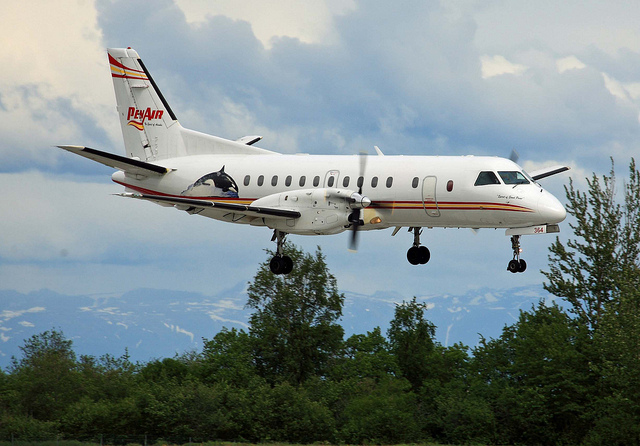
Last month, PenAir landed the country’s most expensive Essential Air Service contract for a flight from Presque Isle, Maine to Boston. Now, PenAir is on track to receive the second most expensive EAS subsidy in the nation as well, for flight service between Anchorage and Adak.
For the last decade, Alaska Airlines has flown a Boeing 737 combi plane out to Adak, twice a week. The plane can hold 72 passengers and enough cargo to keep the community of 300 people well stocked. In exchange for the service, Alaska Airlines receives a $1.6 million annual subsidy from the Department of Transportation as part of the Essential Air Service – or EAS – program, which compensates airlines for flying routes that would otherwise be unprofitable.
City council will hold a special meeting tonight to approve two construction contracts.
The council will open with a discussion of the pavement resurfacing of Airport Beach Road and East Broadway. City staff accepted bids from two firms for the engineering and design phase of the project, and they suggest awarding the $204,000 contract to PND Engineers. According to a memo from City Manager Chris Hladick, the city is hoping to accelerate the pavement resurfacing project and start work on these two roads in the next few months because of winter deterioration. Council is expected to allocate $4 million more to the project as summer approaches.
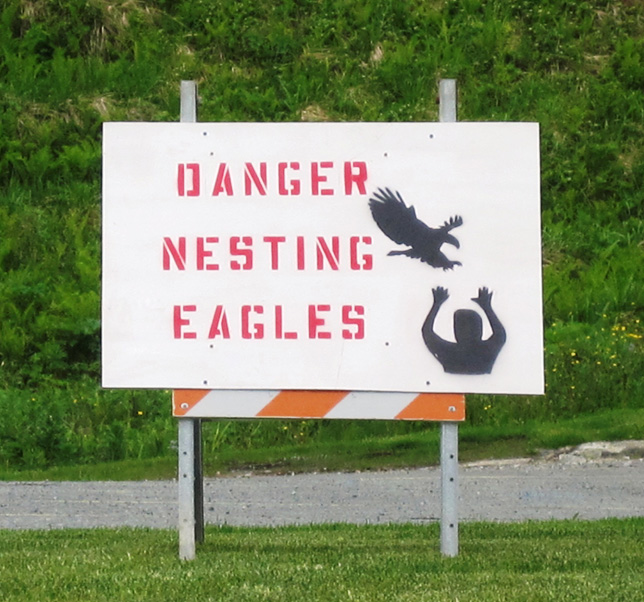
The City of Unalaska has received permission from the U.S. Fish and Wildlife Service to remove two bald eagle nests.
According to the Department of Public Works, one of the nests is located near the Illiuliuk Family and Health Services clinic, and the other is built along the “s-curves” of Airport Beach Road. The city will either dismantle the old nests or place an object, like a buoy, near them to prevent eagles from returning to lay eggs. The nest removals are weather dependent -- if mating season begins before the snow melts away, the city will leave the nests until the fall.